
Healthcare: The Most Expensive Sector to Get Wrong
Healthcare faces the highest data breach costs of any industry, averaging $6.64 million per incident in 2026. As cloud adoption accelerates, misconfigurations threaten patient data, HIPAA compliance, and critical clinical operations. Discover why detection alone isn't enough and how preventive cloud security stops risky configurations before deployment-without disrupting patient care.


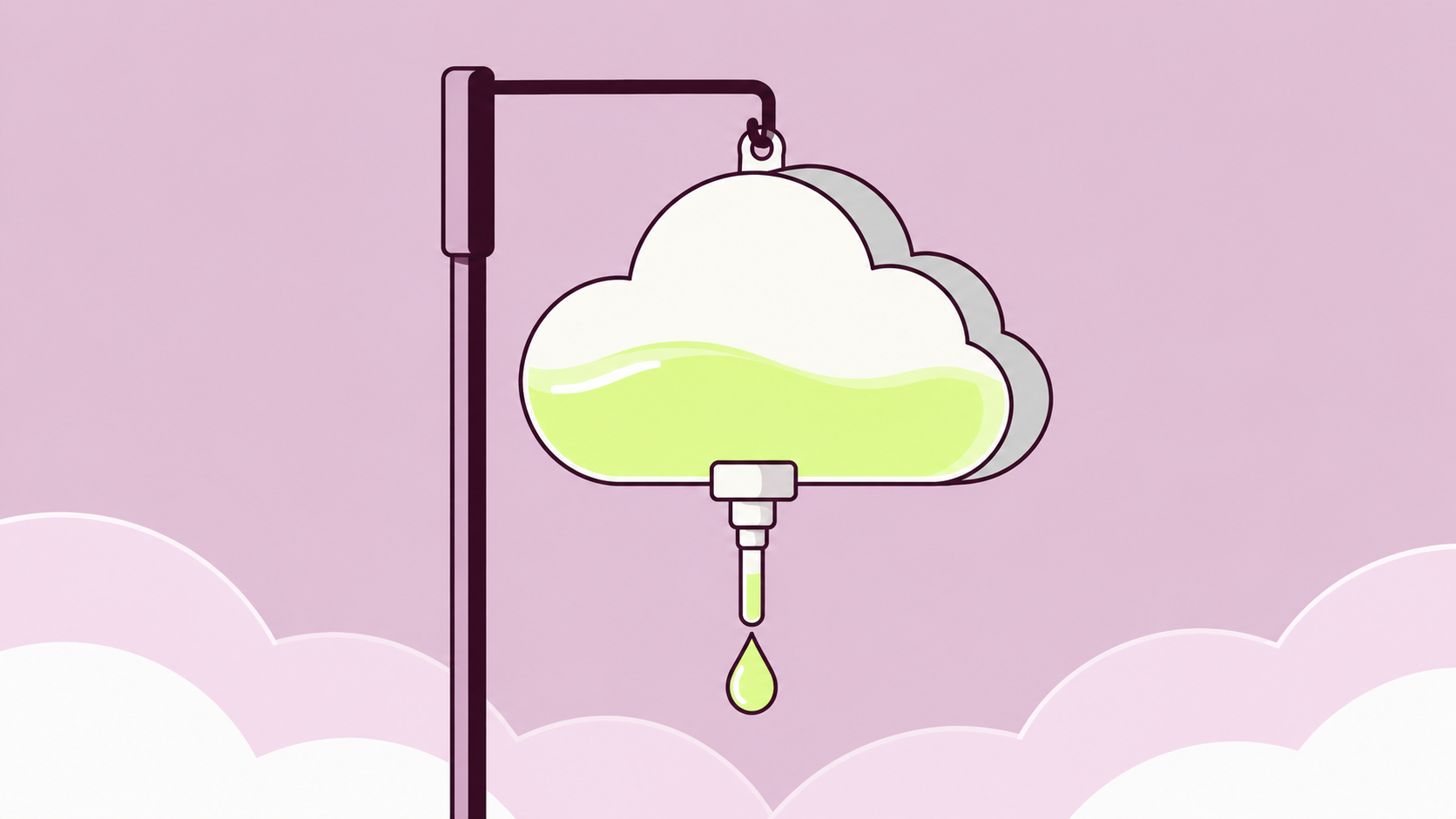
For more than a decade, healthcare has been the most expensive industry in the world in which to suffer a data breach. The 2026 IBM Cost of a Data Breach Report, released in July, again places it top of every sector at an average of $6.64 million per incident - and that is after a 10.5% year-on-year fall from $7.42 million.
Context matters for that number. The same study puts the global average across all industries at $4.99 million, up 12% and the highest figure in the report's 21-year history. In the United States the average reached $11.5 million. Healthcare is not top of that table because it is careless. It is top because of what it holds, how care is delivered, what it is required to protect, and the consequences when critical systems are disrupted.
Why healthcare's cloud problem has a different shape
Three characteristics compound in a way they do not in most other verticals.
The data is unusually rich and unusually permanent.
A payment card can be reissued in a day. A medical history cannot. Protected health information carries diagnoses, identifiers, insurance details and family relationships, and it stays valuable to an attacker indefinitely.
The estate spans two very different worlds
Healthcare still depends on legacy clinical systems that can be difficult and risky to change, particularly when they support critical care delivery. At the same time, research, analytics, imaging and digital health initiatives are introducing modern cloud infrastructure at a much faster pace. Those newer environments increasingly need access to data and systems that were historically local, segmented or never designed for broad connectivity. Every new connection brings identities, permissions, storage configurations and network paths that have to be governed carefully.
Third-party access makes that complexity harder to govern
Healthcare depends on a broad ecosystem of researchers, universities, pharmaceutical companies, technology providers and business associates. Many need access to sensitive data, connected systems or cloud environments as part of research, care delivery and healthcare operations. The challenge is not simply granting that access. It is keeping everyone aligned as security requirements, architecture decisions and guardrails change.
Those changes are often communicated through documentation, email, onboarding sessions or internal guidance. But communicating a requirement does not guarantee that every external team has seen it, understood it or will apply it correctly when the next change is made. As the number of identities, partners and workflows grows, relying on awareness alone becomes increasingly difficult. That is where enforcement at the point of change matters: the policy travels with the environment, rather than depending on every person involved to remember the latest rule.
Put those together and you get an environment where a large amount of highly sensitive data is being placed into cloud resources quickly, by many parties, under a compliance regime that holds the covered entity responsible for all of it.
What the experts are saying
Three assessments worth reading together, because they describe the same problem from different angles.
HHS is framing this as clinical risk, not IT risk
Announcing the proposed Security Rule update, Deputy Secretary Andrea Palm stated that "the increasing frequency and sophistication of cyberattacks in the health care sector pose a direct and significant threat to patient safety." That framing - safety rather than privacy - is what drives regulatory urgency.
Gartner has been consistent on where cloud failures originate
Its assessment is that through 2027, 99% of records compromised in cloud environments will be the result of user misconfigurations rather than attacker sophistication or provider failure.
The Cloud Security Alliance points at the operating model
In its Top Threats to Cloud Computing 2026, published in August, working group chair Michael Roza observes that the most exposed organisations are "the ones whose governance, visibility, and change management have not kept pace with the complexity of their environments." The same report ranks Inadequate Identity and Access Management as the number one cloud threat.
Read them in sequence and the argument assembles itself. The regulator frames the issue as patient safety. The analyst points to configuration as a major source of cloud risk. The research body points to governance, visibility and change management struggling to keep pace with increasingly complex environments.
Healthcare offers a useful parallel. Medicine isn’t satisfied with better diagnosis alone. It works to stop illness before it develops, because treating illness only after it appears means always playing catch-up.
Cloud security has the same problem: when risky changes land faster than they can be detected, the backlog grows until something gets through. To be clear, detection and visibility still matter. But finding risk after it has been introduced is not enough. The stronger control is to govern change as it happens and prevent unsafe configurations from being created in the first place.
That distinction matters even more in healthcare. A payment card can be reissued in a day. A medical history cannot.
The regulatory picture, stated accurately
There is a lot of noise about HIPAA changes, so it is worth being precise, because vendors have been overstating this. OCR announced a Notice of Proposed Rulemaking on 27 December 2024, published in the Federal Register on 6 January 2025. The comment period closed on 7 March 2025 with several thousand submissions. It would be the first substantial overhaul of the Security Rule since 2003.
As of mid-2026 it remains proposed. No final rule has been issued. OCR's regulatory agenda originally indicated May 2026; that date passed, and OMB now shows final action targeted for July 2027. A coalition of more than 100 organisations led by CHIME wrote to HHS in December 2025 urging full withdrawal, citing cost - HHS's own regulatory impact analysis estimated roughly $9 billion in first-year industry cost.
So nothing has changed yet. What has not changed either is OCR's enforcement posture under the existing rule, which continues.
What the proposal would require is the more interesting part:
- Encryption of ePHI at rest and in transit, with limited exceptions
- Multi-factor authentication for systems accessing ePHI
- Network segmentation to limit access and prevent lateral movement
- A written technology asset inventory and network map, updated annually
- Vulnerability scanning at least every six months and annual penetration testing
- Incident response and restoration within 72 hours
And structurally, the proposal would remove the "required" versus "addressable" distinction. Today, some safeguards can be treated as addressable, allowing an organisation to document why an alternative measure is reasonable and appropriate. Under the proposal, nearly all specifications would become required.
That changes the operational question. If encryption, segmentation or another safeguard is required, detecting that a resource was deployed without it tells you there is a problem - but only after the non-compliant state already exists. The stronger model is to make the required configuration a condition of deployment, so the resource cannot be created in that state in the first place.
The observation worth taking from that list
Look again at what is being proposed. Encryption at rest. Encryption in transit. Network segmentation. Asset inventory. Access control. Almost every one of those is a configuration state, not an activity.
They are not asking for more monitoring. They are asking for resources to be in a particular condition - and to be able to demonstrate that they are, continuously, across an estate that is growing and changing.
That is a meaningful distinction for how you approach it. If encryption at rest is addressable, you can document a justification. If it is required, then a storage account deployed without it is a finding the moment it exists, and remains one until somebody fixes it. Multiply that across a hybrid estate with dozens of business associates provisioning resources and the remediation queue becomes the compliance risk.
The alternative is to make the non-compliant version undeployable. A resource that cannot be created without encryption enabled never appears in the gap analysis, never enters the remediation backlog, and never needs an exception documented. The same logic applies to the asset inventory requirement. An inventory is far easier to maintain when the estate cannot contain configurations you would not have approved.
The business associate problem
The third-party dimension deserves its own note, because it is where healthcare differs most sharply from other verticals.
The proposed rule increases verification and documentation obligations on business associates and makes subcontractors directly subject to requirements. But the practical exposure has always run ahead of the paperwork: a business associate operating in your cloud tenancy creates resources under your compliance obligation, using their own working practices, on their own timeline.
Questionnaires and BAAs establish what a vendor says. They do not observe what their infrastructure looks like on a Tuesday afternoon when someone needs a storage account quickly. This is CSA's number three threat for 2026 - Insecure Third-Party Resources, up from fifth - and in healthcare it is not an edge case. It is the operating model.
What a healthcare CISO told us
We asked a customer in this exact position what changed after deploying preventive enforcement.
“Being able to manage it all from a single place, including the exceptions, is a game changer. We used to struggle so much with blocking. Aryon makes it effortless.”
CISO, Healthcare, US”
The phrase worth noticing there is “we used to struggle so much with blocking.” That is the recognizable failure mode. Healthcare organizations rarely lack the policy - they know what should be enforced. The challenge is turning enforcement on across an estate that may already contain non-compliant or fragile systems without disrupting something clinicians depend on. Nobody wants a security control to interfere with a system supporting critical care.
The result is predictable: enforcement is postponed, risky configurations make it into the environment, and teams are left managing an ever-growing remediation backlog.
How Aryon helps
Aryon enforces cloud security policy at the moment of change, at the cloud control plane, so risky configurations can be stopped before they enter the environment.
For a regulated health system, that maps directly onto the constraints above:
Compliance requirements become deployment conditions
Encryption at rest and in transit, restricted public access, required private endpoints and permitted regions for data residency can be enforced as resources are created or changed, preventing a non-compliant configuration from becoming another finding to remediate.
You see the impact before you enforce
Aryon assesses how a policy would behave against the organisation’s real environment and shows what it would have prevented before enforcement is enabled. Security teams can understand the potential impact, tune the policy and introduce enforcement with far greater confidence.
Existing production infrastructure is not auto-remediated
Aryon does not modify running resources to bring them into compliance. Instead, enforcement applies at the point of change, addressing the concern that introducing stronger controls could unexpectedly alter systems clinicians already depend on.
Policy applies consistently at the point of change
Whether a change comes from an internal platform team, a researcher, an external collaborator or another authorised workflow, the security requirement does not depend on everyone remembering the latest document, email or architecture standard. The policy is evaluated when the change is attempted, with immediate feedback when it does not meet the organization’s requirements.
Evidence becomes continuous
Rather than relying only on a point-in-time assessment before an audit, teams can demonstrate which policies were applied and which risky configurations were prevented as the environment changed.

Frequently Asked Questions
Notes & Sources
IBM Cost of a Data Breach Report 2026, published 29 July 2026, conducted by Ponemon Institute across 602 organisations, and the 2025 edition. HHS OCR HIPAA Security Rule Notice of Proposed Rulemaking, announced 27 December 2024 and published 6 January 2025, and associated HHS statements; OMB Unified Agenda status. Gartner, "Outcome-Driven Metrics You Can Use To Evaluate Cloud Security Controls," 2023. Cloud Security Alliance, "Top Threats to Cloud Computing Survey Report 2026," August 2026. Customer quote from aryon.security. Aryon figures are 2025–26 deployment results.
Continue reading
Exploiting Cloud Misconfigurations, Part 2: How Attackers Discover Cloud Resources
The first thing an attacker needs is a target, so an attack naturally begins with resource discovery. During discovery, the attacker builds and expands a database of resource identifiers. These resources are then checked periodically for exploitable conditions. A resource may be discovered long before an opportunity to exploit it arises.

Ten Years Is a Long Time to Be Wrong
For nearly a decade, a cloud misconfiguration at Toyota left sensitive vehicle data belonging to approximately 2.15 million customers accessible from the internet. What began as a single configuration mistake in 2013 went undetected until 2023, exposing a fundamental weakness in traditional cloud security: detecting misconfigurations only works when someone is looking. And when Toyota finally investigated, it uncovered additional exposures. The incident raises a critical question for every organization operating in the cloud: Why wait to discover a security risk when you could prevent it from existing in the first place?
The Key That Should Not Have Worked
A leaked cloud credential is usually treated as a detection problem. Find it, revoke it, rotate it, and move on. But the Volkswagen and Cariad data exposure raises a more important question: why was there a long-lived credential worth stealing in the first place? When a single reusable key can unlock sensitive cloud data, the leak is only part of the problem - the configuration that allowed that key to exist is the other.
The Role That Should Never Have Existed
On 29 July 2019, Capital One disclosed that an attacker had taken data relating to roughly 106 million people across the United States and Canada. The attacker was Paige Thompson, a former Amazon Web Services engineer, who was arrested the same day and convicted on computer fraud charges in June 2022. The company's settlements reached around $190 million.
Exploiting Cloud Misconfigurations: How Attackers Find Cloud Attack Paths (Part 1 - The Basics)
Cloud attacks don’t always begin with a vulnerability. Often, they begin with a misconfiguration that gives an attacker a path in. In Part 1 of this series, we look at cloud environments from the attacker’s perspective and break down the three conditions behind many exploitable cloud attack paths: Resource DIscovery, Network Accessibility, and Identity-Based Access.
Five Reasons Your Cloud Security Solution Is Failing You
Your cloud security tools may be working exactly as designed. That’s the problem.
Security teams are still finding and fixing the same misconfigurations over and over. The issue isn’t the tools-it’s a reactive model that detects risk after it already exists. Here are five signs that model has reached its limit.