
Five Reasons Your Cloud Security Solution Is Failing You
Your cloud security tools may be working exactly as designed. That’s the problem.
Security teams are still finding and fixing the same misconfigurations over and over. The issue isn’t the tools-it’s a reactive model that detects risk after it already exists. Here are five signs that model has reached its limit.


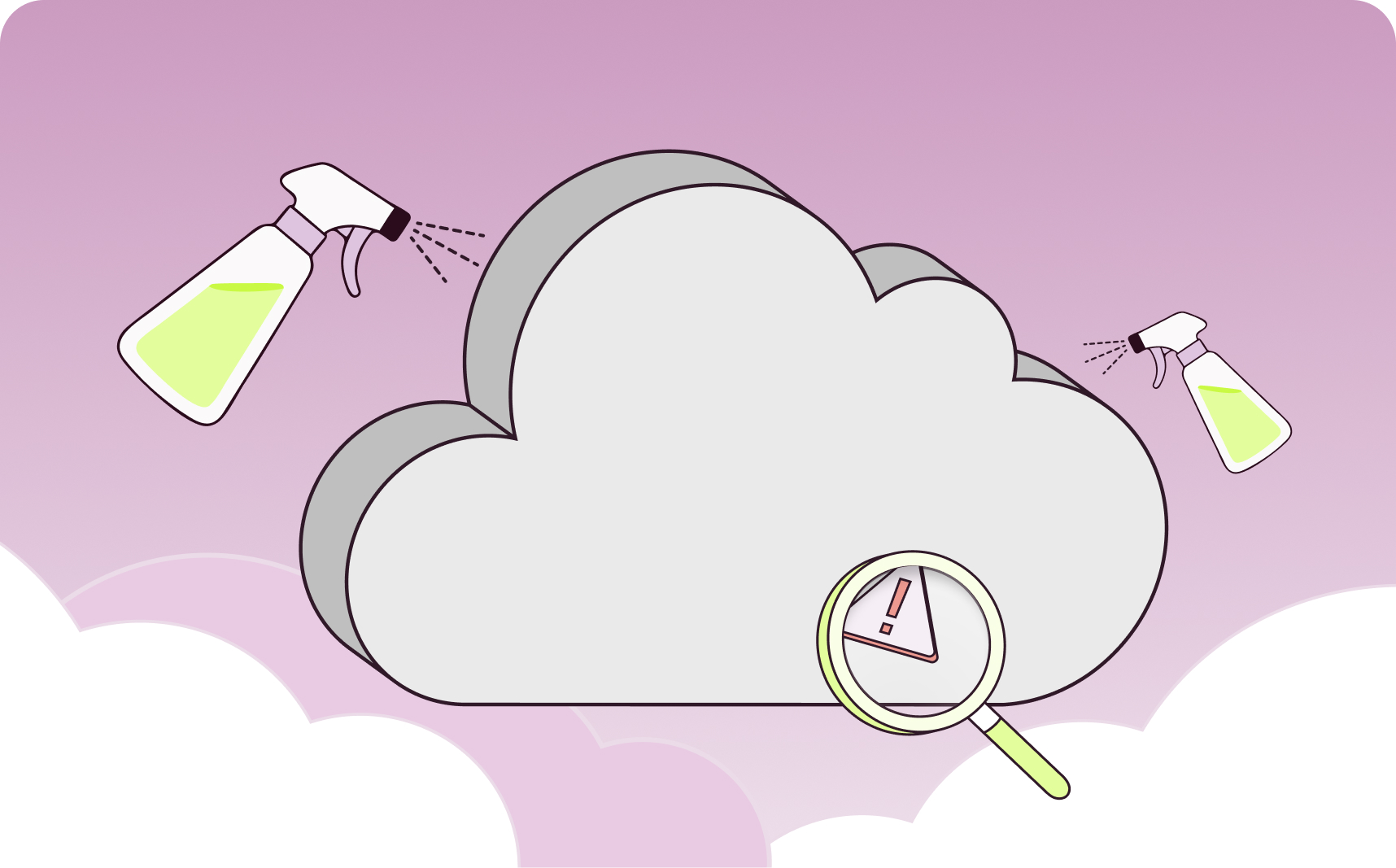
Your tools are working exactly as designed. That is the problem.
Here is an uncomfortable pattern. Security teams buy a cloud security platform, deploy it properly, staff it well, and two years later they are still finding the same categories of misconfiguration they found in month one.
The instinct is to blame the tool, the team, or the budget. Usually none of those is the real answer. The tools are doing precisely what they were built to, it is the model that is wrong not the tool. What they were built to do has a structural limit, and most organisations run into it without ever naming it.
Here are the five places it shows up.
1. Your platform finds problems after they already exist
Cloud Security Posture Management scans your environment and reports what it finds. That is the design. It is a good design for what it does.
But a scan can only report on something that has already been created. The resource exists. It is running. It may already be reachable from the internet. The clock on your exposure started when it was provisioned, not when your platform noticed.
Between those two moments there is a window. In some environments it is minutes. In many it is hours or days, depending on scan cadence and how quickly a finding is triaged. And a gap that opens and closes between two scans is invisible to the scan entirely. Our own ShutterGap research measured exactly this. We found that 20% of publicly shared RDS snapshots appeared and disappeared in under two minutes, and 99% of the RDS and DocumentDB snapshots later deleted were gone within 30 minutes of creation - against a CSPM scan cadence that typically runs once a day.
You are not being notified about future risk to handle.You are being told about a risk that has already happened.
2. Remediation is too consuming
This is the part that quietly consumes the security budget.
A single finding does not end when it is generated. Somebody triages it. Somebody works out which team owns the resource. Somebody establishes why it was configured that way. Somebody writes a fix and deploys. Somebody re-scans to confirm. And every one of those fixes is a change to something already running. We catalogued the ways it goes wrong in a companion piece, 50 Ways to Break Production: Why Cloud Security Remediation Is Harder Than It Looks.
Repeat that for every finding, across every account, in every cloud, every time the remediation poses a real operational risk to the organization. The MTTR stretches into weeks and months - not because anybody is slow, but because the volume is structurally larger than the capacity assigned to it.
More coverage makes this worse. Buying a better scanner produces more findings, and more findings produce more backlog. You end up scaling the queue while the risk stays where it was.
3. The same misconfiguration comes back
Ask your team a simple question: how many of last quarter's cloud findings were repeats of an issue you had already fixed?
The number is usually high, and it is the clearest signal that a detection-only model has hit its ceiling. Remediation fixes one instance. It does nothing to stop the next one being created tomorrow by a different team in a different account.
That is not a failure of execution, It is a failure of the reactive model. It is what happens when you treat a recurring production of risk as a series of individual incidents.
4. Your controls only see part of how infrastructure gets created
Some organisations have invested in IaC scanning instead. Catching a misconfiguration in a pull request is far cheaper than catching it in production.
The limit is coverage. Infrastructure-as-code scanning sees what goes through the pipeline. It does not see:
- somebody making a change in the console
- a script run from the CLI
- an external service provider with delegated access
- an estate that arrived through an acquisition and has not been onboarded
- an AI agent provisioning infrastructure using a developer’s credentials
That last one is becoming increasingly important. The Cloud Security Alliance’s Top Threats to Cloud Computing 2026 report, published in August 2026, ranked Inadequate Identity and Access Management as the number-one cloud security threat and introduced AI-Enhanced Attacks at number two.
As autonomous systems and non-human identities take on more infrastructure operations, the gap becomes harder to ignore: controls that only inspect what passes through the IaC pipeline cannot govern every path through which cloud infrastructure is created or changed.
If you only control the pipeline, you control the part of your estate that was already the most disciplined.
5. Turning on prevention without the expertise is scary
This is the one that stops most organizations, and almost nobody says it out loud.
Cloud providers give teams the primitives to enforce policy, but not the expertise to know exactly what should be enforced, where, and how. That expertise is a major blocker.
The bigger blocker is that you have an existing estate full of resources that would violate those policies today. Enforce the policy and you might break something. So the project stays in monitoring mode indefinitely, or ships riddled with exceptions that erode the control until it means very little.
Unmanaged exceptions become the problem themselves. They get forgotten. They quietly widen. When waivers are managed correctly, the preventative tool can become useful for audits instead of a burden. You should get the information of who asked for a waiver, why, who approved it and what resources were created using which waiver. Everything is managed, everything is audited. No one would just disable the policy and it remains unseen.
The CSA report's co-chair Michael Roza put the underlying issue well:
“The organizations most exposed to the next generation of cloud threats are not necessarily those with weak perimeter controls. They are the ones whose governance, visibility, and change management have not kept pace with the complexity of their environments.”
Change management. Not detection.
The common thread
None of these five is a tooling defect. They are all the same structural fact viewed from different angles: Your existing controls fail to prevent effectively.
The common thread behind the alert, the triage, the ticket, the remediation time, the recurrence, and the exposure window is the same: cloud security still lacks an effective, scalable way to prevent risky resources from being created in the first place.
How Aryon helps
There is no alert to triage, because there is no finding. There is no remediation project, because there is nothing to remediate. There is no exposure window, because the resource was never created.
Specifically, against the five problems above:
- Timing. We prevent the change before the resource exists, not after a scan discovers it.
- Volume. Fewer misconfigurations reach your environment, so your existing CSPM or CNAPP generates far less to chase. We sit in front of it, and it keeps working.
- Recurrence. One policy prevents a class of misconfiguration permanently, across every account and every cloud, rather than fixing instances one at a time.
- Coverage. Because we act at the deployment stage and do not depend on scanning code, we cover the console, CLI, third parties and AI agents alongside your pipeline.
- Deployability. Aryon makes sure your preventative policies are safe for production. You can switch enforcement on in a live environment without breaking it.

Frequently Asked Questions
Notes & Sources
Continue reading
The Key That Should Not Have Worked
A leaked cloud credential is usually treated as a detection problem. Find it, revoke it, rotate it, and move on. But the Volkswagen and Cariad data exposure raises a more important question: why was there a long-lived credential worth stealing in the first place? When a single reusable key can unlock sensitive cloud data, the leak is only part of the problem - the configuration that allowed that key to exist is the other.
The Role That Should Never Have Existed
On 29 July 2019, Capital One disclosed that an attacker had taken data relating to roughly 106 million people across the United States and Canada. The attacker was Paige Thompson, a former Amazon Web Services engineer, who was arrested the same day and convicted on computer fraud charges in June 2022. The company's settlements reached around $190 million.
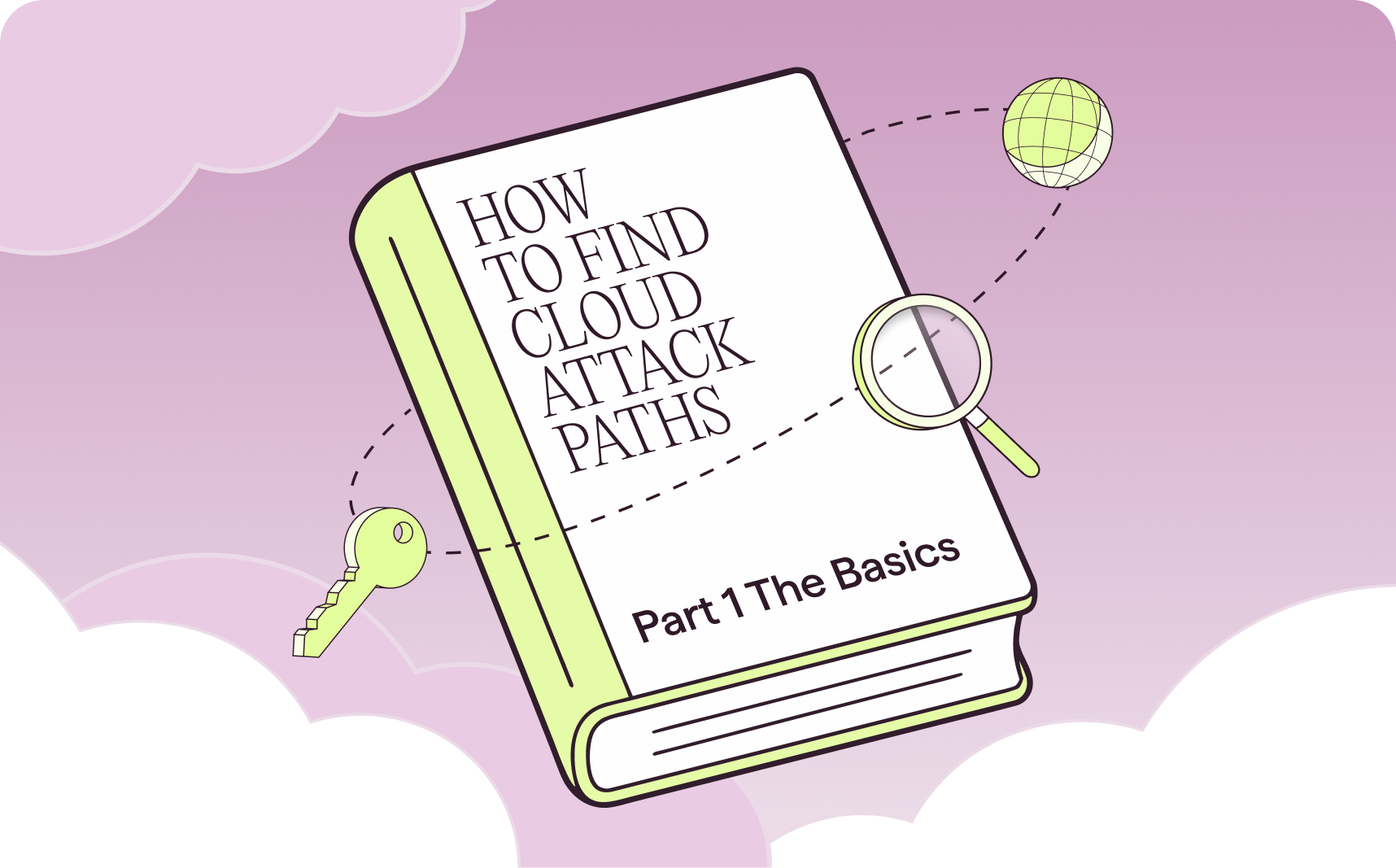
Exploiting Cloud Misconfigurations: How Attackers Find Cloud Attack Paths (Part 1 - The Basics)
Cloud attacks don’t always begin with a vulnerability. Often, they begin with a misconfiguration that gives an attacker a path in. In Part 1 of this series, we look at cloud environments from the attacker’s perspective and break down the three conditions behind many exploitable cloud attack paths: Resource DIscovery, Network Accessibility, and Identity-Based Access.
50 Ways to Break Production - Why Cloud Security Remediation Is Harder Than It Looks
Cloud remediation is rarely as simple as changing a setting. Fixes can break production, require architectural changes or migrations, and conflict with IaC ownership. Prevention takes a different path: enforce the right configuration before deployment, while the resource is still cheap and safe to change. This article explores the challenges of remediating issues safely and effectively, and highlights what teams need to consider when remediation is unavoidable.
Cloud ShutterGap: Millions of Cloud Resources Exposed - The Blind Spot CSPM/CNAPP Tools Don’t Cover
Aryon's research reveals millions of misconfigured ephemeral cloud resources, publicly exposed for only moments before being removed. Often, these exposures last only a few minutes, long enough for attackers to discover and exploit them, but too short for traditional CSPM and CNAPP tools to detect. Many of these resources contain highly sensitive information.

The Missing Link Between Security and Operation: Bringing Security Policy into the Moment of Deployment
In cloud environments, security and operations often meet too late. Security teams define the policies, best practices, compliance requirements, threat models, and risk tolerance that should guide how cloud resources are configured. DevOps and IT teams apply those decisions in practice as they create, configure, and change cloud resources every day.