
Exploiting Cloud Misconfigurations: How Attackers Find Cloud Attack Paths (Part 1 - The Basics)
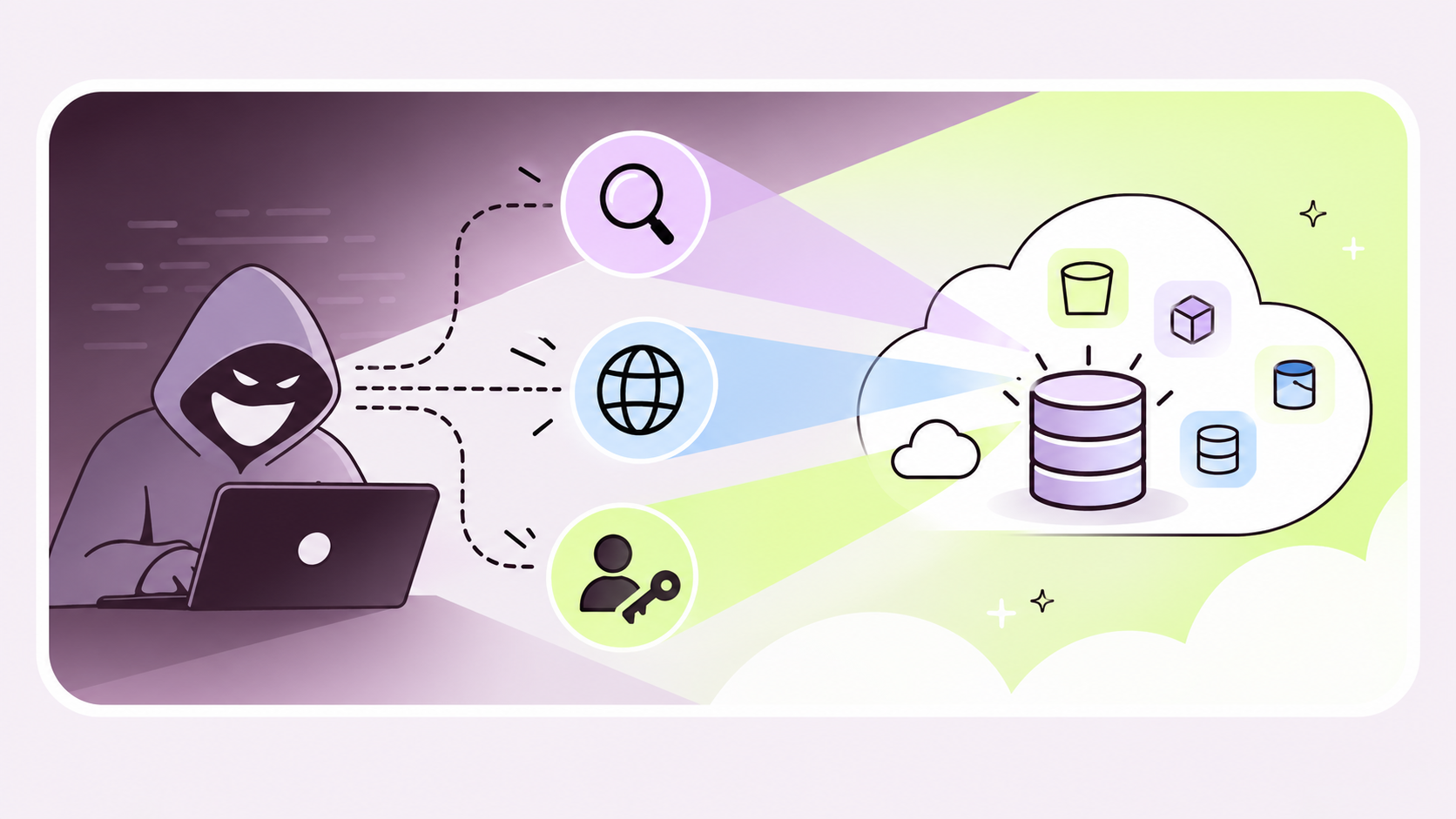
Cloud attacks don’t always begin with a vulnerability. Often, they begin with a misconfiguration that gives an attacker a path in. In Part 1 of this series, we look at cloud environments from the attacker’s perspective and break down the three conditions behind many exploitable cloud attack paths: resource discovery, network accessibility, and identity-based access.

How to Attack cloud environments
When it comes to attacking cloud environments, there’s still a lot of confusion. Many people think of the cloud as simply a managed version of on-prem infrastructure. So when asked how they would attack a cloud environment, they often fall back on the traditional playbook: scan for open ports, discover exposed servers, look for known vulnerabilities, gain an initial foothold, and perform lateral movement.
That approach definitely works, but it only covers one side of the attack surface.
The other side is cloud-native. Instead of targeting servers, attackers target cloud settings. This distinction - targeting identities and configurations rather than hosts and networks - is what separates cloud-native security from traditional infrastructure security.For example discovering an S3 bucket that is accessible to all AWS users via a wildcard (*) in a resource-based policy or finding Azure SQL using weak passwords and having public network access.
In this series, we’ll look at cloud environments from an attacker’s perspective. We’ll break down the different attack paths, and explore the obstacles attackers need to overcome in order to execute an attack. Let’s start from the basics.
The Holy Trinity
Usually, three things determine whether a misconfiguration can be exploited for serverless resources:
- Resource Discovery
- Network Accessibility
- Identity Based Access
When an attacker has all three it is a game over. In some cases, like discussed in ShutterGap, all three appear to an attacker at once, and the exploitation is immediate. But most of the times each of the three obtained to an attacker differently.
Guessing Resource Names
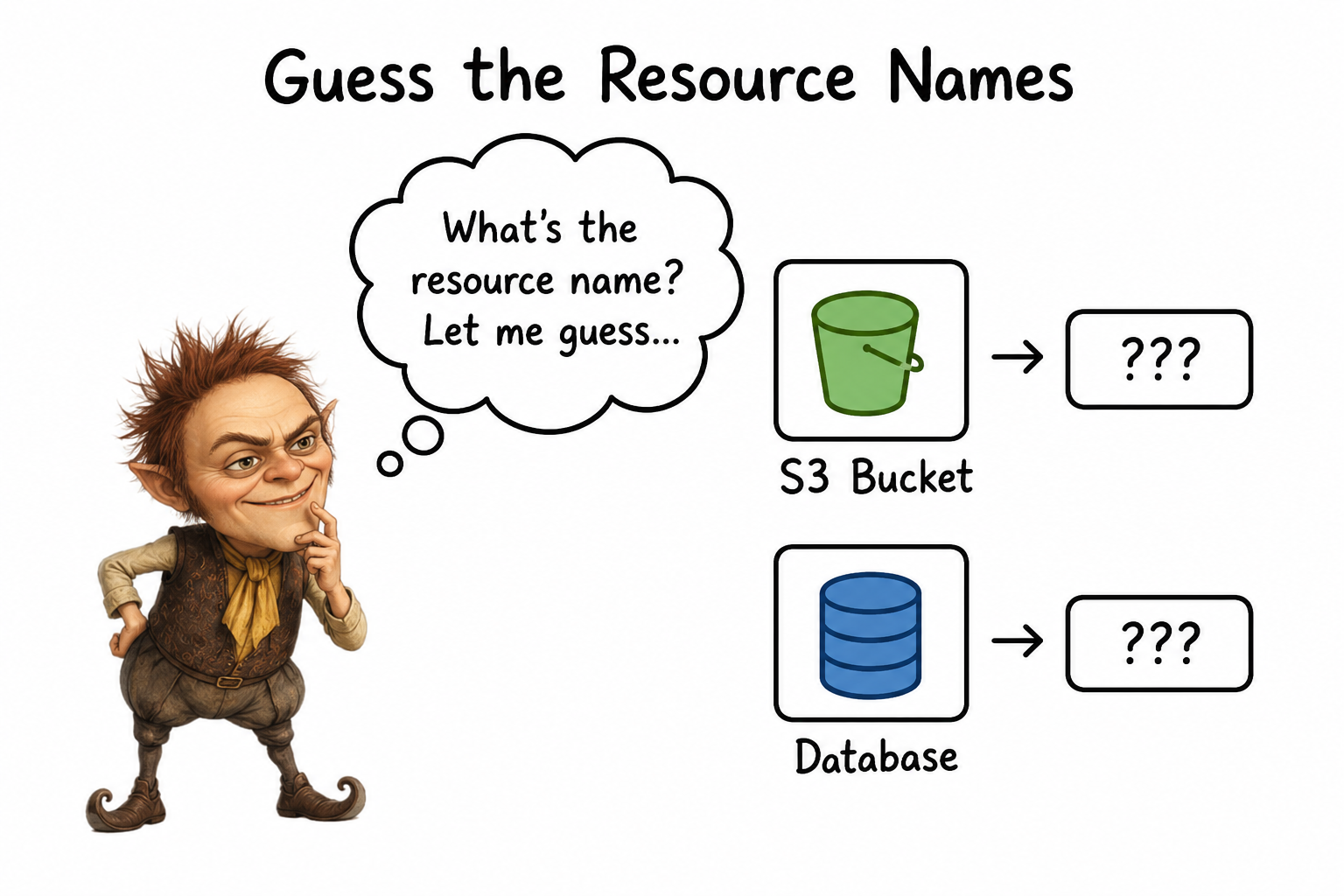
Many teams do not treat resource names or identifiers as sensitive. But in practice, attackers often need to know what to target before they can access it. That makes resource discovery a critical part of cloud exploitation.
Resource discovery is a broad topic in offensive security. The two most common examples are:
- Public IPv4 addresses
- Cloud resource names
Some cloud resources are primarily identified by their public IPv4 address, such as public RDS instances. Others are primarily identified by a globally unique resource name, such as AWS S3 buckets or Azure SQL servers.
So how can attackers guess resource identifiers?
For public IPv4 addresses, the common approach is CIDR-based enumeration.
For cloud resource names, there are two common approaches.
The first is brute-force or dictionary-based name enumeration. This method focuses on guessing predictable names using common naming patterns, company names, environments, regions, project names, and wordlists.
The second is public hostname discovery. Instead of guessing names directly, this method looks for resource names that are already stored, referenced, or reachable publicly. These names may appear in DNS records, certificates, public repositories, documentation, logs or third-party indexes.
But this raises an important question:
Even if you can guess an identifier, can you verify that the resource actually exists? What if the resource is supposed to be private?
This is one of the most common misconceptions about cloud security. In cloud environments, “private” means privately accessible, not invisible for identification. A resource may block direct access, but its identifier can still exist in a global namespace.
In other words, private access is not the same as private existence. Given a guess, attackers can often find a way to test whether a resource exists even if it is “Private”. Once they can do that at scale, resource discovery becomes less of a guessing game and more of an enumeration problem.
Network: The Forgotten Perimeter
Cloud security often repeats the phrase: “Identity is the new perimeter.”
There is truth in that. But over time, it has also become an excuse to ignore network exposure.
In many cloud services, resources are reachable from everywhere by default unless defenders explicitly restrict access. If a resource is discoverable and reachable from the internet, the attacker can often skip the network problem and move directly to the last step - identity and access.
It does not have to work this way. In practice, network restrictions function as cloud security guardrails closing off an attack path before identity is ever tested, in practice network restrictions can eliminate a large portion of practical exploitability. Even when identity is misconfigured, limiting from where a resource can be reached can prevent the attack path from being usable.
This is especially important for PaaS resources. In Azure, it is usually straightforward to configure network restrictions for services such as Storage Accounts, Web App, and Key Vaults through the resource’s networking settings. This makes it relatively easy to use network controls as an additional defensive layer alongside identity.
.png)
In AWS, similar outcomes are often possible, but the implementation is usually more policy-driven. This policy-driven approach is part of what makes AWS misconfiguration prevention a distinct challenge compared to Azure's more direct networking controls. Defenders may need to rely on resource-based policies or Resource Control Policies to restrict access based on network context for S3 Buckets, Lambda Functions or KMS Secrets.
As a result, we often see stronger network restrictions applied more consistently in Azure PaaS environments than in comparable AWS services. Not because AWS cannot enforce them, but because the path to doing so is often more complex.
Identity - The Holy Grail of Cloud Security
Identity is one of the most important factors in cloud exploitation. But it is often misunderstood. Many times, identity is treated as the only “real” reason an attack succeeds. Sometimes identity issues are placed in a separate category entirely, as if they are not misconfigurations.
But in cloud environments, identity is configuration. Put another way, identity choices are cloud security policy decisions. And in many cases, choosing the right policy could have prevented a breach.
What Next in This Series
We’ll take a deep dive into each of the steps required to carry out an attack in a cloud environment. For each step, we’ll cover the relevant attack techniques, defensive measures, and how the different cloud providers compare.
Throughout the series, we’ll use storage and database resources as representative examples.

Frequently Asked Questions
Notes & Sources
Continue reading
Five Reasons Your Cloud Security Solution Is Failing You
Your cloud security tools may be working exactly as designed. That’s the problem.
Security teams are still finding and fixing the same misconfigurations over and over. The issue isn’t the tools-it’s a reactive model that detects risk after it already exists. Here are five signs that model has reached its limit.

50 Ways to Break Production - Why Cloud Security Remediation Is Harder Than It Looks
Cloud remediation is rarely as simple as changing a setting. Fixes can break production, require architectural changes or migrations, and conflict with IaC ownership. Prevention takes a different path: enforce the right configuration before deployment, while the resource is still cheap and safe to change. This article explores the challenges of remediating issues safely and effectively, and highlights what teams need to consider when remediation is unavoidable.
Cloud ShutterGap: Millions of Cloud Resources Exposed - The Blind Spot CSPM/CNAPP Tools Don’t Cover
Aryon's research reveals millions of misconfigured ephemeral cloud resources, publicly exposed for only moments before being removed. Often, these exposures last only a few minutes, long enough for attackers to discover and exploit them, but too short for traditional CSPM and CNAPP tools to detect. Many of these resources contain highly sensitive information.

The Missing Link Between Security and Operation: Bringing Security Policy into the Moment of Deployment
In cloud environments, security and operations often meet too late. Security teams define the policies, best practices, compliance requirements, threat models, and risk tolerance that should guide how cloud resources are configured. DevOps and IT teams apply those decisions in practice as they create, configure, and change cloud resources every day.

A Year of Proof: Why Prevention is the Only Path Forward
As we close the chapter on 2025, we find ourselves reflecting on a year shaped by three powerful forces: curiosity that pushed boundaries, relentless execution that turned ideas into impact, and, above all, operational proof that our approach works.